
The Crowded Dance Floor: Why We Fail to Make Room for Love

“Move! Why aren’t you moving?” the leader asked with visible displeasure. “I gave you such a clear signal. You need to move! Otherwise, how can we dance?!”

The teacher walked over and gently patted the leader’s shoulder. “Your left hand opened up, but your body didn’t make room for her. There is no path for her to get through.”

In that moment, Teacher revealed a universal truth: Leading isn’t just about giving a signal; it’s about creating the space for another person to exist within. This tension isn’t confined to the ballroom; we see it play out in the smallest, most mundane details of our daily lives.

The Psychological “Land Grab”
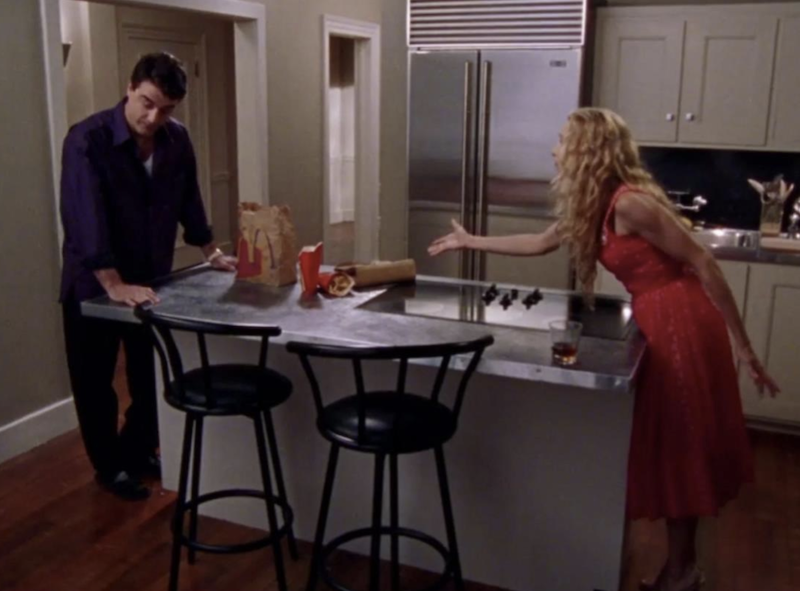
Consider an early episode of Sex and the City, where Carrie complains to her friends that Mr. Big won’t let her keep even the simplest necessities at his place. “I stay over all the time,” Carrie laments, “but I have to carry everything with me because he has this weird thing about stuff”. Samantha’s response is blunt: “Honey, this isn’t a land grab, it’s a relationship! Talk to him!”

When Carrie eventually leaves a trail of belongings — a hairdryer, a toothbrush, a bottle of face wash — Big packs them all into a bag and returns them. This wasn’t just about a cluttered bathroom; it was a clash over the “evolution of the relationship” — a partner’s willingness to provide a stable space for the other to stay, settle, and belong.

But why is that space so hard to provide?

Sometimes, it is because one is not ready to commit (like Big), while at other times, one’s internal “real estate” is already fully booked.

Stolen Space and the Enmeshed Family

According to Murray Bowen’s theory of the Differentiation of Self, a healthy relationship requires a balance between togetherness (our need for attachment) and individuality (our ability to be our own person).

In an “enmeshed” family, the urge for togetherness is a tidal wave. In these systems, children are not encouraged to develop a separate “self.” Instead, they are drafted into emotional roles to soothe their parents’ anxieties. When a person is so tethered to their family of origin, their internal “real estate” is fully booked. There is no psychological room left for their individuality to grow — and consequently, no room for a romantic partner to settle in.

The Consequence: A Relationship Without Room

When a person has not differentiated from their family of origin, they have difficulties in creating a healthy “Us” because there is no developed “Me.” This leads to several painful, crowded dynamics:

  • The Emotional Surrogate: The husband who plays the “mama’s boy,” unconsciously compensating for the intimacy his mother lacked with his father. Because he is “tied up” as his mother’s partner even after marriage, he leaves his wife in a “one-person marriage”.
  • The Forced Alliance: Because the husband is emotionally absent — anchored to his own parents — the lonely wife feels excluded. She then forms a tight, enmeshed alliance with her children to find the connection her husband cannot provide.
  • The Scapegoated Child: The children in these systems often develop depression or anxiety. They are the “identified patients” absorbing the stress of a relationship that has no room to breathe because everyone is too busy being who their family needs them to be.

When these children grow up, history often repeats itself. A son is highly likely to repeat his father’s patterns. A daughter may feel so obligated to soothe her mother’s bitterness or loneliness that she feels “uncomfortable” leaving home to pursue her own self-growth; alternatively, she may try to fight for relational distance by creating extreme physical distance. In these systems, “Individuality” is seen as a threat. If a child chooses their own path over a parent’s whim, the “Togetherness” force reacts with guilt or anger.

Creating the “We-ness”

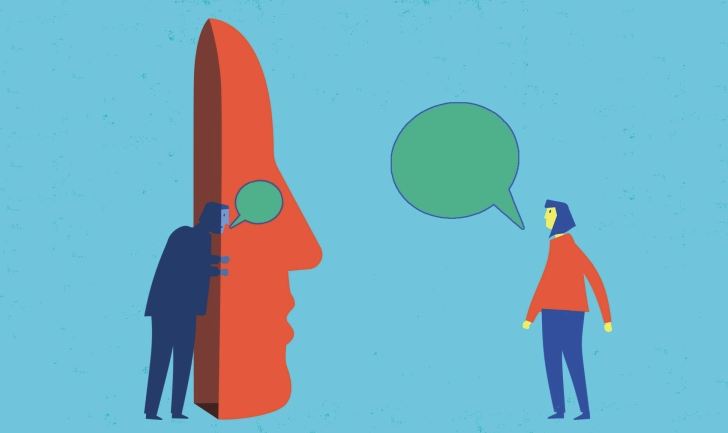
In any healthy intimacy, there must be three distinct entities: You, Me, and Us. However, if “Me” was never allowed to develop because the family demanded total “Togetherness,” the “Us” will always feel crowded, suffocating, or impossible to maintain.

In Sex and the City, Big saw Carrie’s toothbrush as a ‘land grab’ — an invasion of his physical territory. But for many, the fear is psychological. If you grew up in a family that demanded you always ‘fit in’ rather than ‘stand out,’ your sense of self is likely very fragile. Letting a partner in may feel dangerous; you fear that their presence will be so heavy it will crush the individuality you’ve struggled to build.

It takes two to tango, but those two people must be individuals first. To give your partner space to dance with you, you must first claim the space that belongs to you.

Only then can you stop reacting to the ghosts of your past and start dancing with the person in your arms.

Ch Huang, Counselor

Shall We Stop Pretending?

When a woman stops faking orgasms, how will her relationship change? What will that kind of relationship be like?

In tango, if the follower stops pretending to understand the leader, can they still dance? How will they stay in sync?

If both dancers stop managing their expressions and actions, can their true selves be freely seen between them and on the dance floor?

Back to relationships: if I stop caring about what others think, what kind of partner will I choose? How will I show our relationship in public?

*Leader: The person who leads in tango (traditionally male); Follower: The. person who follows in tango (traditionally female)

“Followers, stop being nice to your partner. If you do not know what he wants you to do, stop doing the step on your own!” The male teacher told the group of Tango learners in one group lesson. ”

When you do the steps on your own, your partner would never know and learn how to give the signals right.”

The female teacher followed, “Tango is the social dance, and we are learning the social dance, not stage tango, not for the competition. When we do stage tango or compete, we need to take care of each other to perform certain steps. But in the social dance, we respond to what we receive! Be Honest here.”

I remember reading a story online once…

Zhenzhen met up with her long-lost best friend, Maggie, and her fiancé, George, at an Italian restaurant. When George ordered pesto pasta, which Zhenzhen knew Maggie had always disliked, Zhenzhen looked puzzled. Maggie, however, said nothing, gazing adoringly at George. While George was away taking a phone call, Zhenzhen teased, ‘Wow! Is this true love or what? I remember you never liked pesto! How come you love it when George orders it?’

Maggie smiled wryly, a hint of resignation in her voice. ‘Well, on our first date, he said the pesto at that restaurant was particularly delicious and wanted me to try it. It was pretty good, so I politely said I liked it, you know, since it was our first date! Who knew he’d keep ordering it every time we went to an Italian restaurant…’

‘But you could tell him! You clearly love creamy white sauce. Why not be honest?’ Zhenzhen blurted out.

‘Ah, it’s not that big of a deal. It’s just once in a while. Why make a fuss over everything?’ Maggie replied.

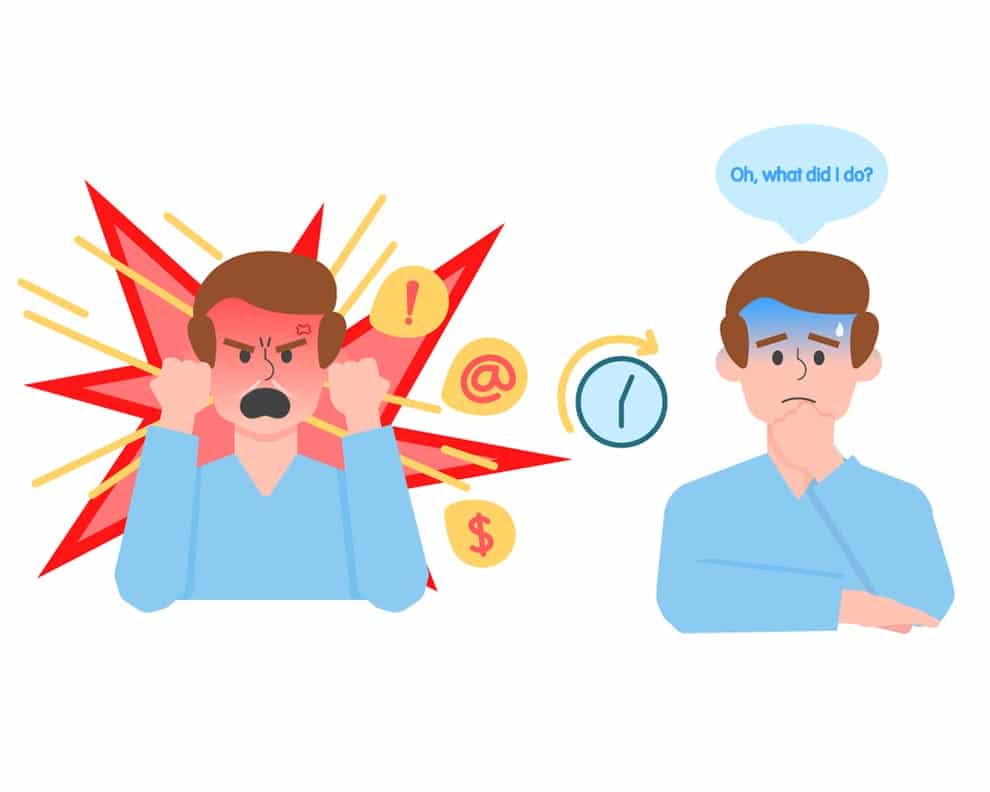
Years later, as Zhenzhen comforted Maggie after her divorce, Maggie said wistfully, ‘I think people need to be honest with themselves. I always felt like some things weren’t worth mentioning. I accommodated George to make him happy and avoid arguments, because relationships require compromise. But over time… it became really hard. I felt frustrated and stifled. When I finally snapped, he was completely taken aback, clueless about what was going on. He thought I was overreacting and being too emotional — that everything had been fine before, so why was I suddenly exploding! He never stopped to consider if he might have done something wrong…’

‘Yeah, if you don’t tell the truth at the beginning, it becomes harder and harder to bring up later, but the discomfort builds up. If you’re always the one compromising, an explosion is almost inevitable. He…probably never knew how you really felt, and just assumed you were enjoying it and happy all along,’ Zhenzhen said.”

Erin B. Cooper, a clinical psychologist at the Center for Marital and Sexual Health, who conducted research on women’s faking of orgasms, indicated:

According to the analytic result of the 481 heterosexual female undergraduates’ (average age 20.33 years) answers on the Female Orgasm Scale (FOS), 4 main reasons for faking orgasms were identified:

(1) Altruistic Deceit, faking orgasm out of concern for a partner’s feelings;

(2) Fear and Insecurity, faking orgasm to avoid negative emotions associated with the sexual experience;

(3) Elevated Arousal, a woman’s attempt to increase her own arousal through faking orgasm; and (4) Sexual Adjournment, faking orgasm to end sex.

Perhaps, this phenomenon isn’t limited to sex. In couple relationship or tango, people may fake satisfaction or pretend understanding for similar reasons: pretending to like something or be happy out of love/care or fear of losing the relationship; forcing oneself to complete a dance step to avoid being seen as a poor dancer; or simply wanting a “graceful exit,” to quickly end an awkward situation or find a new partner.

However, expressing one’s true feelings is not easy. Even knowing the importance of “being honest with ourselves,” many factors must be considered in practice, making it impossible to simply adhere to the principle of “saying what you really think.”

So, how do we find the balance?”

Ch Huang, Counselor

The No-Fault Game in Tango & Relationship

In couples counselling, it’s common to hear clients complain and criticize their partners, feeling they have been wronged, are struggling in the relationship, and are contemplating ending it.

A wife, who came to the couple therapy due to the divorce issues, angrily said: ‘My husband’s individual therapist only listened to his side of the story and concluded that our marriage was toxic for him. That therapist suggested that separating would help him overcome his depression, and therefore recommended a divorce. That’s so unfair! That therapist has never met me or seen us as a couple. How can he/she make such a definitive judgment?”In learning tango, it’s common to hear dancers criticize their partners. ‘You should do this here…; You aren’t standing firmly…

In a group class, Adam and Emily consistently got stuck on the new move that required Emily to turn. After trying and failing five or six times, Adam, the leader, started to get a little impatient. When they got stuck again, he stared at her with wide eyes, as if to say, ‘You’ve done it again? I’ve already prepared for this, why can’t you do it?!’ Emily looked back at him with a blank expression, thinking, ‘I’ve done everything I’m supposed to, I don’t know what’s wrong.’”

The teacher asked Adam and Emily to demonstrate the steps again, pointing out that Adam’s body was already off-balance and the space he created for the turn was incorrect in the few steps leading up to it. To compensate, Emily had also tilted her body. When attempting a move that requires both partners to maintain a vertical axis, two people with crooked postures would naturally be unable to perform it. At the same time, Emily’s habitual forward lean also limited her personal stability, reducing the couple’s movement options.

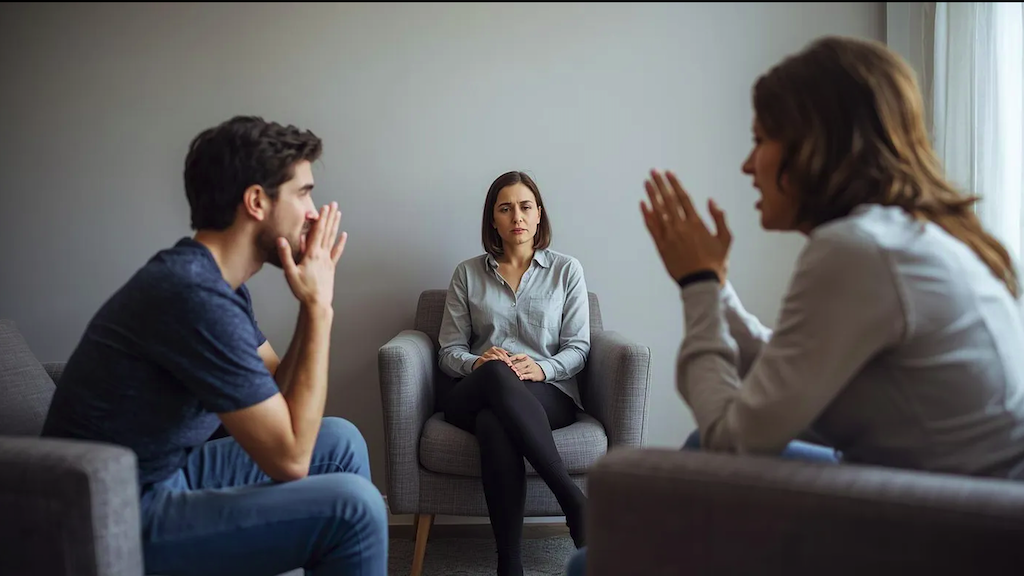
When discussing relationship issues in a counseling setting, I always try to invite both partners to attend. If I only hear one side’s story or understand their relationship from a single perspective, it’s easy to miss how the partners “work together” to create the current dynamic. It’s just like a tango teacher, who will let the two dancers dance a tanda first. Besides observing how they dance as a unit, the teacher will also dance with the leader (usually, but not limited to, the male) and the follower (usually, but not limited to, the female) separately. This allows the teacher to feel their individual body movements before giving them advice.

In a relationship, it’s often not about who’s right or wrong. Both people need to make adjustments to keep dancing together.

Of course, deciding not to dance together anymore is also a choice.

Ch Huang, Counselor

Therapy can Change your Brain

Very much like the human who carries it, our brain is a very social creature. Our life circumstances, the relationships we have, experiences we have – all of these are influencing the development of our brain. The newest research in neuroscience shows that too many negative experiences will result in developing certain neural patterns that can lead to various mental illnesses.
Read More
1 2 3

Search

+