
The No-Fault Game in Tango & Relationship
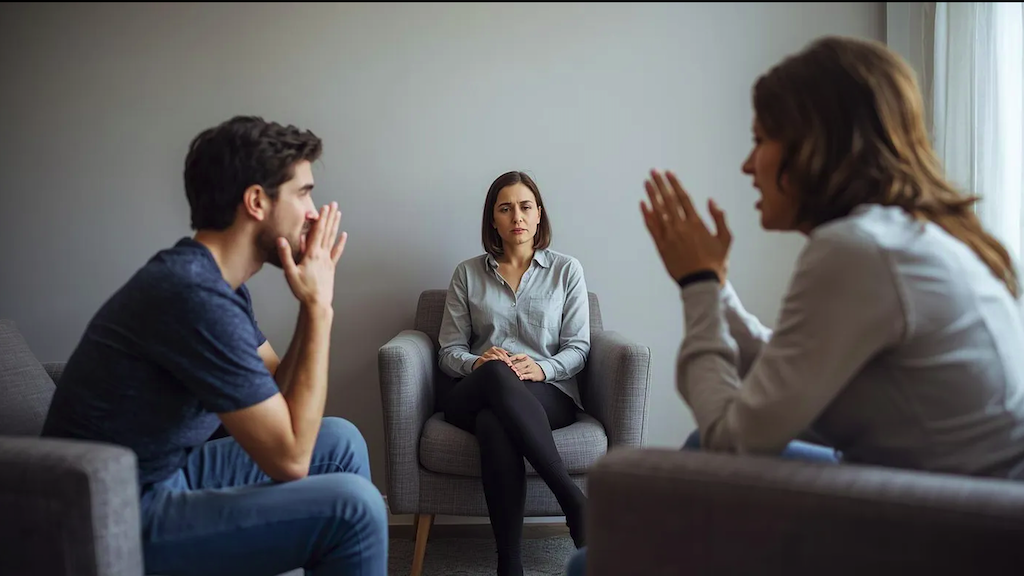
In couples counselling, it’s common to hear clients complain and criticize their partners, feeling they have been wronged, are struggling in the relationship, and are contemplating ending it.
A wife, who came to the couple therapy due to the divorce issues, angrily said: ‘My husband’s individual therapist only listened to his side of the story and concluded that our marriage was toxic for him. That therapist suggested that separating would help him overcome his depression, and therefore recommended a divorce. That’s so unfair! That therapist has never met me or seen us as a couple. How can he/she make such a definitive judgment?”In learning tango, it’s common to hear dancers criticize their partners. ‘You should do this here…; You aren’t standing firmly…
In a group class, Adam and Emily consistently got stuck on the new move that required Emily to turn. After trying and failing five or six times, Adam, the leader, started to get a little impatient. When they got stuck again, he stared at her with wide eyes, as if to say, ‘You’ve done it again? I’ve already prepared for this, why can’t you do it?!’ Emily looked back at him with a blank expression, thinking, ‘I’ve done everything I’m supposed to, I don’t know what’s wrong.’”
The teacher asked Adam and Emily to demonstrate the steps again, pointing out that Adam’s body was already off-balance and the space he created for the turn was incorrect in the few steps leading up to it. To compensate, Emily had also tilted her body. When attempting a move that requires both partners to maintain a vertical axis, two people with crooked postures would naturally be unable to perform it. At the same time, Emily’s habitual forward lean also limited her personal stability, reducing the couple’s movement options.
When discussing relationship issues in a counseling setting, I always try to invite both partners to attend. If I only hear one side’s story or understand their relationship from a single perspective, it’s easy to miss how the partners “work together” to create the current dynamic. It’s just like a tango teacher, who will let the two dancers dance a tanda first. Besides observing how they dance as a unit, the teacher will also dance with the leader (usually, but not limited to, the male) and the follower (usually, but not limited to, the female) separately. This allows the teacher to feel their individual body movements before giving them advice.
In a relationship, it’s often not about who’s right or wrong. Both people need to make adjustments to keep dancing together.
Of course, deciding not to dance together anymore is also a choice.
Ch Huang, Counselor